
Category Archives: amplification
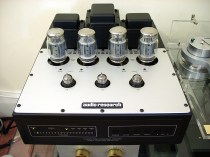
Audio Research VSi55
Few would dispute that a decently done valve amplifier is capable of superb sonics, but the problem is that they’re not as user-friendly as solid-state designs – at least to the uninitiated. While you can buy any sensible transistor integrated,
Audio Research VSi55
Few would dispute that a decently done valve amplifier is capable of superb sonics, but the problem is that they’re not as user-friendly as solid-state designs – at least to the uninitiated. While you can buy any sensible transistor integrated,

Rotel RB-1092
The past few years have seen a quiet revolution in stereo amplifier design, as we’ve witnessed a migration from one way of designing power amplifiers to another. The slow move from Class AB to Class D operation is significant for
Rotel RB-1092
The past few years have seen a quiet revolution in stereo amplifier design, as we’ve witnessed a migration from one way of designing power amplifiers to another. The slow move from Class AB to Class D operation is significant for

Musical Fidelity X-150
Launched in 2002 as a direct rival to Naim’s Nait 5 integrated, this is one of the many quirky but charming products Musical Fidelity has produced over the years. It was a beautiful little half-width integrated – the company has
Musical Fidelity X-150
Launched in 2002 as a direct rival to Naim’s Nait 5 integrated, this is one of the many quirky but charming products Musical Fidelity has produced over the years. It was a beautiful little half-width integrated – the company has
Marantz MA-5
Back in 1980, Japanese manufacturers were engaged in mortal combat trying to make the cleanest and most powerful transistor amplification yet devised. Whereas Sony and Yamaha had both recently gone down the V-FET route (with the TA-N7B and B2 respectively)
Marantz MA-5
Back in 1980, Japanese manufacturers were engaged in mortal combat trying to make the cleanest and most powerful transistor amplification yet devised. Whereas Sony and Yamaha had both recently gone down the V-FET route (with the TA-N7B and B2 respectively)

Onkyo A-9755
By the end of the first decade of the twenty first century, China was beginning to make real inroads into the world’s hi-fi market, taking advantage of its low manufacturing costs to produce large and impressive amplifiers for less money
Onkyo A-9755
By the end of the first decade of the twenty first century, China was beginning to make real inroads into the world’s hi-fi market, taking advantage of its low manufacturing costs to produce large and impressive amplifiers for less money

JungSon JA-88D
Much of what is wrong with transistor amplifiers can be surmised in two words; switching distortion. The sound of those little three legged semiconductors turning themselves on and off on demand is omnipresent, and most people get used to it
JungSon JA-88D
Much of what is wrong with transistor amplifiers can be surmised in two words; switching distortion. The sound of those little three legged semiconductors turning themselves on and off on demand is omnipresent, and most people get used to it
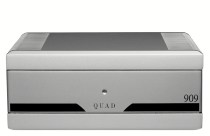
Quad 909
Quad has traditionally sold hi-fi to affluent, (small c) conservative types who appreciate quality but don’t want to pay outlandish amounts of money for it. Perhaps this explains why the 909 power amplifier is little more than a lightly reworked and rehoused
Quad 909
Quad has traditionally sold hi-fi to affluent, (small c) conservative types who appreciate quality but don’t want to pay outlandish amounts of money for it. Perhaps this explains why the 909 power amplifier is little more than a lightly reworked and rehoused

Musical Fidelity A1000
Traditionally, British hi-fi amplifiers start as integrateds, then grow up into preamplifier/power amplifier combinations as the price rises. If spending more than around £2,000, it’s not normal to buy a one-box amplifier – you’ll start to look at two. That’s
Musical Fidelity A1000
Traditionally, British hi-fi amplifiers start as integrateds, then grow up into preamplifier/power amplifier combinations as the price rises. If spending more than around £2,000, it’s not normal to buy a one-box amplifier – you’ll start to look at two. That’s
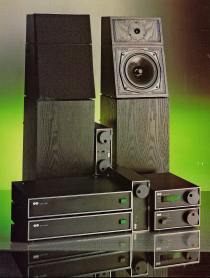
Naim NAP 135
Some may think this just another of the many power amplifiers that the Salisbury solid-state specialists have produced over the years, but I think it has something about it that warrants a special place in the great scheme of hi-fi
Naim NAP 135
Some may think this just another of the many power amplifiers that the Salisbury solid-state specialists have produced over the years, but I think it has something about it that warrants a special place in the great scheme of hi-fi

Creek CAS4040
At the beginning of the nineteen eighties, the greatest hi-fi success story ever told was surely the NAD 3020. This little integrated amplifier had made a huge impact on the budget hi-fi market, and rightly so. Introduced in 1979, costing
Creek CAS4040
At the beginning of the nineteen eighties, the greatest hi-fi success story ever told was surely the NAD 3020. This little integrated amplifier had made a huge impact on the budget hi-fi market, and rightly so. Introduced in 1979, costing
Rogers A100
Back in the nineteen seventies, Rogers was one of the most famous hi-fi brands in Britain. Originally founded by Jim Rogers in 1947 to make speakers such as the Theatrical Horn Loudspeaker, the company later got the licence to build
Rogers A100
Back in the nineteen seventies, Rogers was one of the most famous hi-fi brands in Britain. Originally founded by Jim Rogers in 1947 to make speakers such as the Theatrical Horn Loudspeaker, the company later got the licence to build
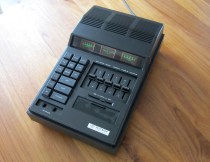
Nytech CTA 252XD
Nytech’s classic ‘Calculator Tuner Amplifier’ is largely forgotten now, but made a great impression on the British hi-fi market when its star burned brightly in the late nineteen seventies. Its name was no mere whimsy – back when launched in
Nytech CTA 252XD
Nytech’s classic ‘Calculator Tuner Amplifier’ is largely forgotten now, but made a great impression on the British hi-fi market when its star burned brightly in the late nineteen seventies. Its name was no mere whimsy – back when launched in
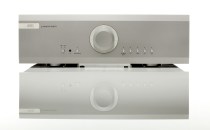
Musical Fidelity AMS35i
Talk to Antony Michaelson about his prodigious product portfolio and there are a few select designs with which he speaks with huge affection, the A1000 being one. A lavish affair, it’s a two-box design, the first being the amp itself and
Musical Fidelity AMS35i
Talk to Antony Michaelson about his prodigious product portfolio and there are a few select designs with which he speaks with huge affection, the A1000 being one. A lavish affair, it’s a two-box design, the first being the amp itself and
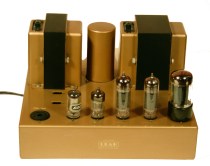
Leak TL/12
One of the most evocative names in British hi-fi, this now long-lost company was started by Harold Joseph Leak in London, 1934, later to be sold to the Rank Organisation in January 1969, when it’s fair to say its fortunes
Leak TL/12
One of the most evocative names in British hi-fi, this now long-lost company was started by Harold Joseph Leak in London, 1934, later to be sold to the Rank Organisation in January 1969, when it’s fair to say its fortunes
Marantz PM-94
Most nineteen eighties amplifiers weren’t much to write home about, especially the gadget festooned behemoths. But Marantz’s flagship was special – a chunky 25kg integrated which sold for £1,000, it boasted the company’s unusual ‘Quarter-A’ system, in which lower level signals
Marantz PM-94
Most nineteen eighties amplifiers weren’t much to write home about, especially the gadget festooned behemoths. But Marantz’s flagship was special – a chunky 25kg integrated which sold for £1,000, it boasted the company’s unusual ‘Quarter-A’ system, in which lower level signals

Sugden A21SE
Sugden needs no introduction; anyone with more than a passing interest in audiophilia knows the A21 is a series of English amplifiers which started in the mid nineteen sixties with an 11 watt solid-state bipolar integrated amplifier. It was produced over
Sugden A21SE
Sugden needs no introduction; anyone with more than a passing interest in audiophilia knows the A21 is a series of English amplifiers which started in the mid nineteen sixties with an 11 watt solid-state bipolar integrated amplifier. It was produced over
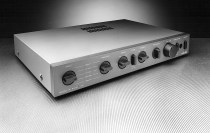
Audiolab 8000A
It all started in a Cambridge bedroom – Audiolab, that is. Alongside Derek Scotland, Philip Swift quit his ‘day job’ as a director of Lentek Audio to start a company that was to have a major impact on the hi-fi
Audiolab 8000A
It all started in a Cambridge bedroom – Audiolab, that is. Alongside Derek Scotland, Philip Swift quit his ‘day job’ as a director of Lentek Audio to start a company that was to have a major impact on the hi-fi

Myst tma3
“We were trying to achieve an amplifier that was properly made”, says Michael Maloney. “At the end of the nineteen seventies when we came into being, the quality of the components was pretty poor. They were still using old carbon
Myst tma3
“We were trying to achieve an amplifier that was properly made”, says Michael Maloney. “At the end of the nineteen seventies when we came into being, the quality of the components was pretty poor. They were still using old carbon

Naim NAIT 2
The original NAIT was the product that started the nineteen eighties ‘super integrated’ craze. Whereas once integrateds had been very much the poor relation of their high end pre-power brethren, suddenly it was cool to go for a high quality one-box
Naim NAIT 2
The original NAIT was the product that started the nineteen eighties ‘super integrated’ craze. Whereas once integrateds had been very much the poor relation of their high end pre-power brethren, suddenly it was cool to go for a high quality one-box
A&R A60
Back in the mid seventies, the UK hi-fi market was another country. At the affordable end of the market, names like Pioneer, Sony, JVC, Hitachi and Wharfedale ruled showroom shelves, whereas further up, KEF, Quad, Tannoy and Celestion prevailed. The
A&R A60
Back in the mid seventies, the UK hi-fi market was another country. At the affordable end of the market, names like Pioneer, Sony, JVC, Hitachi and Wharfedale ruled showroom shelves, whereas further up, KEF, Quad, Tannoy and Celestion prevailed. The
 zStereo